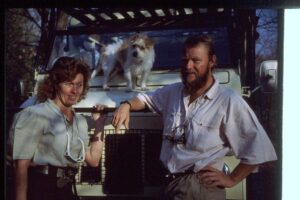
Salome and had a lodge in the Okavango, a place that will supply more than a few memories for this blog over the coming year.
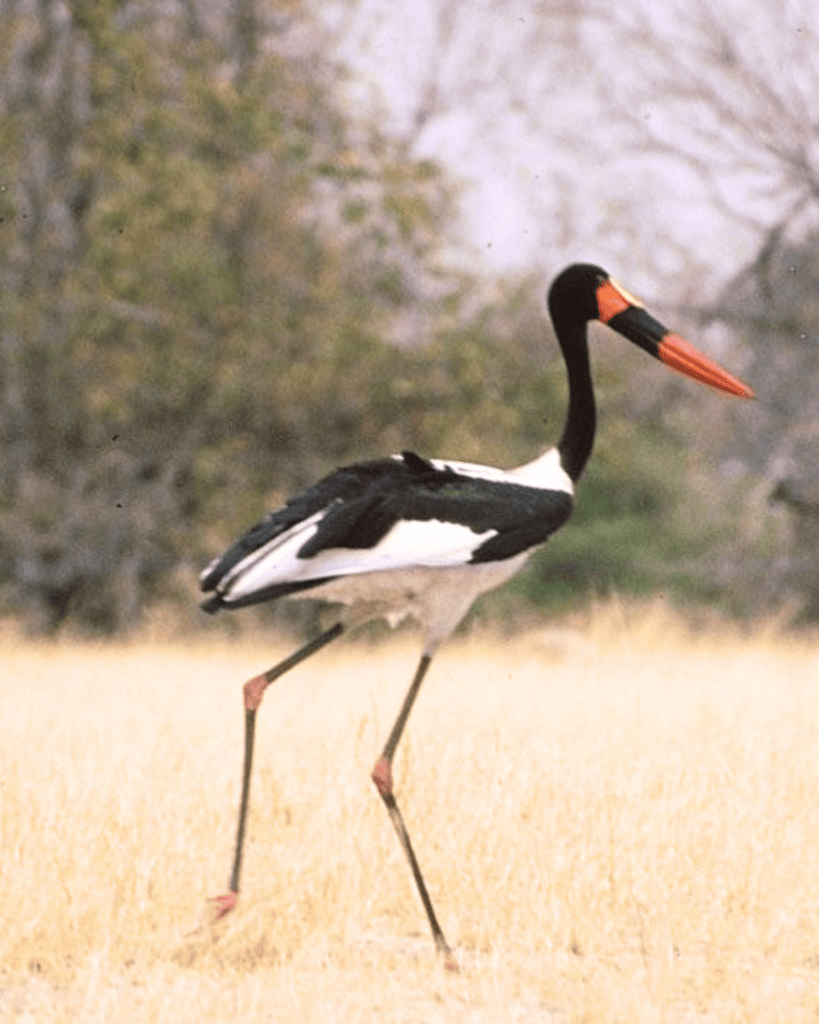
One of those memories involves a saddle-billed stork.
Lee Ouzman, the chief pilot for Air Xaxaba, rescued a stork chick whose parents had either died or abandoned it. He took the bird back to Xaxaba Lodge and patiently began hand-raising it. Before long, he found himself unexpectedly attached to the rapidly growing chick. It was cute and fluffy, mottled light brown and grey, a far cry from the magnificent black-and-white adult it was destined to become.
The bird adopted Lee as its parent and followed him everywhere. It would stand and watch him take off in his aircraft, much as it might once have watched its biological parents take flight.
Then came a labour dispute at Xaxaba. An aggrieved employee reported Lee to the Department of Wildlife in Maun for keeping the bird without a permit. Word of an imminent inspection spread quickly – someone told someone, who told someone else -and soon reached the people at Xaxaba.
Within the hour, the bird was flown out.
When Lee landed unexpectedly at our camp, he was visibly agitated. The precious stork chick was with him on the plane. Qhaakwa lay deep in the Delta, far from Maun, and the hope was that the authorities would not hear of the bird for a long while – long enough, perhaps, for it to mature and eventually fly off to join other storks.
We received strict dietary instructions. Unsurprisingly, the menu was fish for breakfast, fish for lunch, and fish for dinner.
“Not even an occasional medium-rare steak with cheese sauce?” I asked casually.
Lee, a tall and serious man, looked down at me with withering disdain. I promised never again to take liberties of that sort. That promise, of course, did not last long. I just can’t help myself.
Our new guest needed small fish, which meant we had to catch tiddlers. Our solution was simple: we put bread inside bottles, dropped them into the shallow water in front of the lodge, where schools of guppies darted about in chaotic patterns, and harvested whatever swam inside. Three bottles, rotated regularly, did the job.
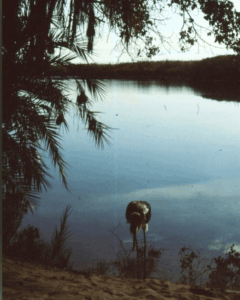
The stork grew quickly, soon showing the first hints of adult plumage. Part of the family and fearless of humans, he would sometimes follow Salome and me down to our chalet and stand on one leg – yes, they really do that – beside the door.
Whatever they say about storks, it took a dozen years before our baby was delivered.
As I chirped to an exasperated Salome, “Beware – cloak-and-dagger intrigue storks the unwary.”
He began following us all over the island, even joining me on early-morning game walks. The guests adored him and were endlessly amused when he inspected their breakfast plates for tasty morsels. Our fishing skills improved rapidly as we struggled to satisfy the appetite of a rapidly growing bird.
Eventually, Salome and I had to leave the island for a few days to attend meetings in Maun. I left Rox, our manager, in charge of the bird, with very specific instructions for its care.
When we returned, the first thing Salome did was look for the stork.
It was nowhere to be found.
“Where is our bird?” we asked increasingly frantically.
Suddenly, every staff member appeared to understand neither English nor my basic but usually effective Setswana.
After two days of storming about the camp, dread giving way to fury, the truth finally emerged. The bird had been killed and roasted.
The island felt emptier after that, death, it seemed, had indeed stalked us at Qhaakwa – quietly and without apology.