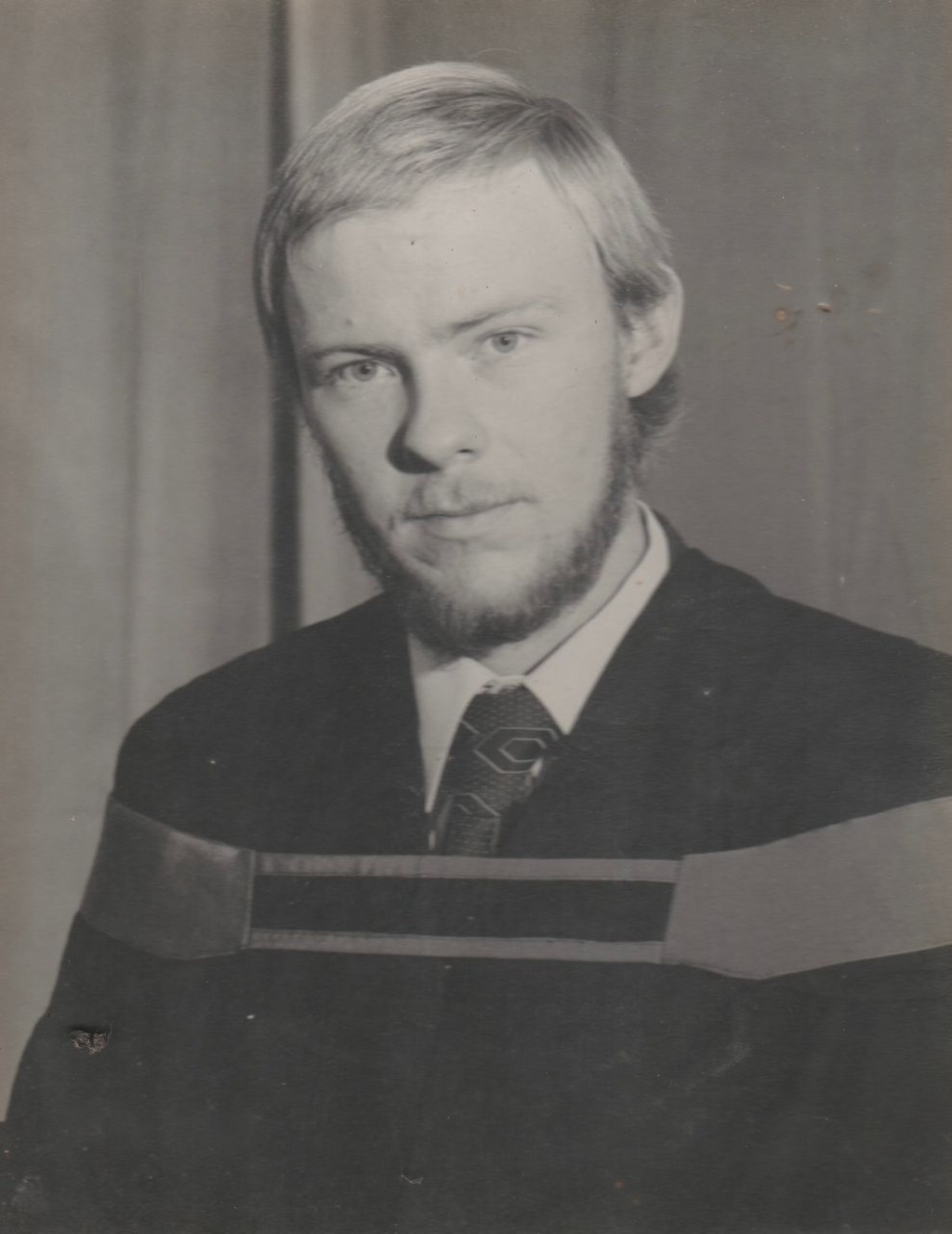
Fifty years ago today, on 16 June 1976, my morning started unremarkably. After a quick breakfast I drove to the University of the Witwatersrand, where I was studying law and economics. On the car radio I heard reports that school students in Soweto were protesting against the government’s policy requiring Afrikaans to be used as a medium of instruction for many subjects. The demonstrations would soon become one of the defining moments in South African history.
During the day a large crowd gathered on campus and I wandered over to see what was going on. Student leaders were whipping up the audience with alarming reports emerging from Soweto. Police had opened fire on protesters and used tear gas in attempts to disperse the crowds. Across Soweto vehicles and buildings had been set alight, dense black smoke hung over the township and barricades were appearing in places as the unrest spread. Newspapers would soon carry dramatic headlines, “Is this the end of the South Africa that we know?”, and photographs reflecting the scale of the crisis.
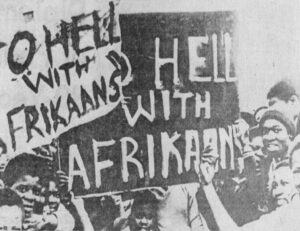
Then my old friend Gareth, who I knew from second-year primary school days, came up beside me. He was in fourth-year medicine and had been at Baragwanath Hospital, the main hospital in Soweto, from the early hours, attending to the casualties. He said that wounded victims were being brought into the Casualty Department at a rate that medical staff could not keep up with and that all the beds were full, so new victims were filling up the passageways. Gareth, exhausted after hours of treating badly wounded patients, had stepped outside for a cigarette break when he noticed people quietly waiting at a nearby bus stop. According to Gareth, an armoured police vehicle pulled up and officers opened fire. Moments later he was back inside treating the wounded.
About a thousand students were prepared to follow the call for a protest march to John Vorster Square, the notorious Johannesburg headquarters of the South African Police. It was known as a place where detainees reportedly died in suspicious circumstances, including alleged suicides from barred windows and mysterious deaths in tenth-floor cells. The idea was to petition the police with a demand to end the violence. After hearing Gareth’s account, I had no hesitation in joining them and Gareth, despite being visibly shattered from the morning’s events, chose to come with us.
Gareth and I tagged along at the back of the march with a few other stragglers as we wound through the business sites of Braamfontein.
He had recently lent me James Michener’s Kent State: What Happened and Why, which recounted the 1970 shootings at Kent State University in Ohio, where, just six years earlier, the Ohio National Guard killed four students and wounded nine during anti-war protests. Two of those killed had merely been walking between classes. If that could happen in the United States, I wondered, how much more likely was it in South Africa under the threatened apartheid regime? Gareth nodded sombrely.
I had not given any thought to the route the march was to take to reach the Police Headquarters, but when the column turned south to cross the Queen Elizabeth Bridge I realised the danger that the students would be in. It was a perfect trap if the police blocked off the far end and allowed the protesters to occupy the bridge. If they opened fire, as I fully expected them to, it would be an appalling massacre, with countless dying as the students tried to retreat but had their way blocked by the throng behind them.
“I must get to the front and convince them to turn back,” I shouted to Gareth and started to shoulder my way to the front of the march. There were hundreds of students to get past, and it took a long while to reach the front. By the time I managed it we were well onto the bridge. I burst through to the front of the march, looking for someone who could turn us back and then I saw what we were naively walking into. The police had indeed identified this as a choke point and had blocked off the bridge with three ranks of marksmen: the front row prone, the second kneeling and the third standing in textbook formation. All of them seemed to have their rifles trained on my chest. I thought I was about to die as a large force of baton-wielding police appeared from behind the others and charged us. We weren’t ready for a war and so we piled in chaotic haste over a fence on the other side of which was a steep grassy slope that led down to the railway lines near Johannesburg station. Men and women were falling over their feet and tumbling down the steep slope in panic. Scattered among the largely white university students were a handful of black students, and the fear on their faces was unmistakable. Under apartheid they faced consequences far graver than I ever would. I stopped and sat down, hoping that by delaying my own escape I would not add to the congestion and might give those at greater risk a better chance of getting away.
That decision turned out to be one of the luckiest of my life. Unbeknown to many of us, a group of railway workers armed with metal bars, pickaxes and other vicious improvised weapons lay in wait for the fleeing students and attacked them with brutal hatred, badly injuring many. By the time the crowd turned back up the slope, clashes between them and the baton-wielding police had created scenes of extraordinary violence.
I vividly remember a slight blond student, blood streaming from wounds to his scalp, desperately trying to rally the protesters to resist. I have long believed that this was Bruce Fordyce, who later spoke publicly about the trauma of that day and how it influenced his decision to take up distance running. He would go on to become one of South Africa’s greatest ultramarathon runners.
As the armed railway workers advanced up the hill brandishing their weapons, I decided the police represented the lesser danger. Reaching the fence, a pleasant-looking young man in a tweed jacket offered me a helping hand over it. The moment my feet touched the ground the bastard arrested me and bundled me into the back of a police van. To my surprise, Gareth was already there. I had not seen him since leaving him in the march. He was nursing an enormous welt across his head where a police baton had struck him and looked decidedly dazed.
If our objective had been to reach John Vorster Square, then technically some of us succeeded, although arriving in handcuffs had never been part of the plan. We were taken to the infamous tenth floor. I can at the very least confirm one thing: nobody could have thrown themselves through those heavily barred windows.
Everything was painted in institutional grey. The corridors, the doors and the rows of steel cells were coated in thick glossy paint that reflected the harsh fluorescent lights, making the entire place feel cold, sterile and oppressive. There were too many detainees to fit into the cells, so some of us were allowed to simply wander the corridors and perhaps ponder whether we could commit suicide.
We were fortunate in ways that had nothing to do with merit and everything to do with the system. Most of us were white students from comparatively privileged families whose parents had the influence and resources to demand our release. The police, preoccupied with the unrest unfolding across Johannesburg, seemed only too relieved to let us go the following morning. I have spent many sleepless nights since then, reflecting that the many black South Africans detained during that period could expect no such treatment and faced consequences immeasurably harsher than ours.
Why tell this story on a safari blog? Because, I suppose, like Bruce Fordyce, that day changed the course of my life. Witnessing the violence, fear and political extremism at such close quarters left me with no desire to spend my future in that world. I realised instead that my future lay elsewhere. From that point on I was determined to build a life in the bush, surrounded by wildlife rather than conflict, and as far from politics and angry crowds as I could reasonably get, my law and economics degrees serving only as expensive décor for the walls of our bush-style home. That decision shaped everything that followed.